

Unlock better AI outcomes with the right strategy
Download the AWS eBook to discover the three keys to successful AI and machine learning adoption: democratizing access, operationalizing ML, and building trust across your organization.
AI and machine learning are becoming essential to how organizations improve customer experiences, optimize operations, and create new products and services. But as adoption grows, many teams face the same challenge: how do you turn AI experimentation into repeatable, trusted business value?
This AWS eBook outlines three strategic pillars that can help organizations deliver more successful AI outcomes: democratize, operationalize, and build trust.
It explains how businesses can give more teams access to AI capabilities, standardize machine learning development, scale projects more effectively, and apply responsible AI principles across the full lifecycle. It also explores how AWS services such as Amazon Bedrock and Amazon SageMaker can help organizations build, train, deploy, and govern AI and ML solutions more securely and efficiently.
Download the eBook to understand how your organization can create a stronger foundation for AI success — from first use cases through to enterprise-wide adoption.
What you’ll learn
Why generative AI is accelerating investment in AI and ML
How to democratize access to AI across more teams and use cases
Why operationalizing ML is critical for scaling AI successfully
How responsible AI, security, and privacy help build trust
How AWS can support AI and ML adoption at every stage of maturity

Complete the form to download the eBook and discover how AWS can help your organization make AI more accessible, scalable, and trusted.
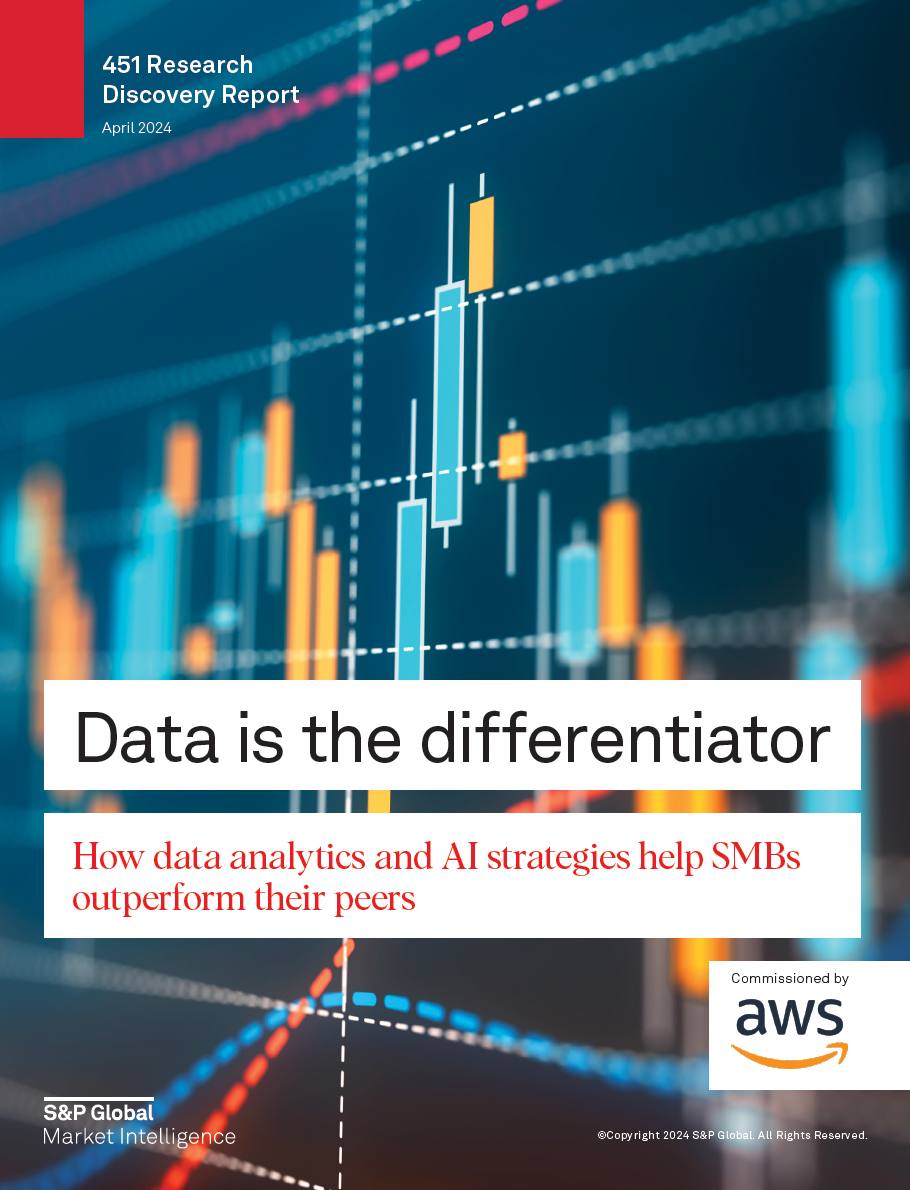
Data is the differentiator
Download the 451 Research report, commissioned by AWS, to see how data-driven SMBs are outperforming their peers and using AI to improve performance, productivity, and growth.

Artificial Intelligence for small and medium business
Download the AWS eBook to see how SMBs can use AI to cut costs, boost productivity, improve customer experiences, and support future growth.
